By Simon Jenkins

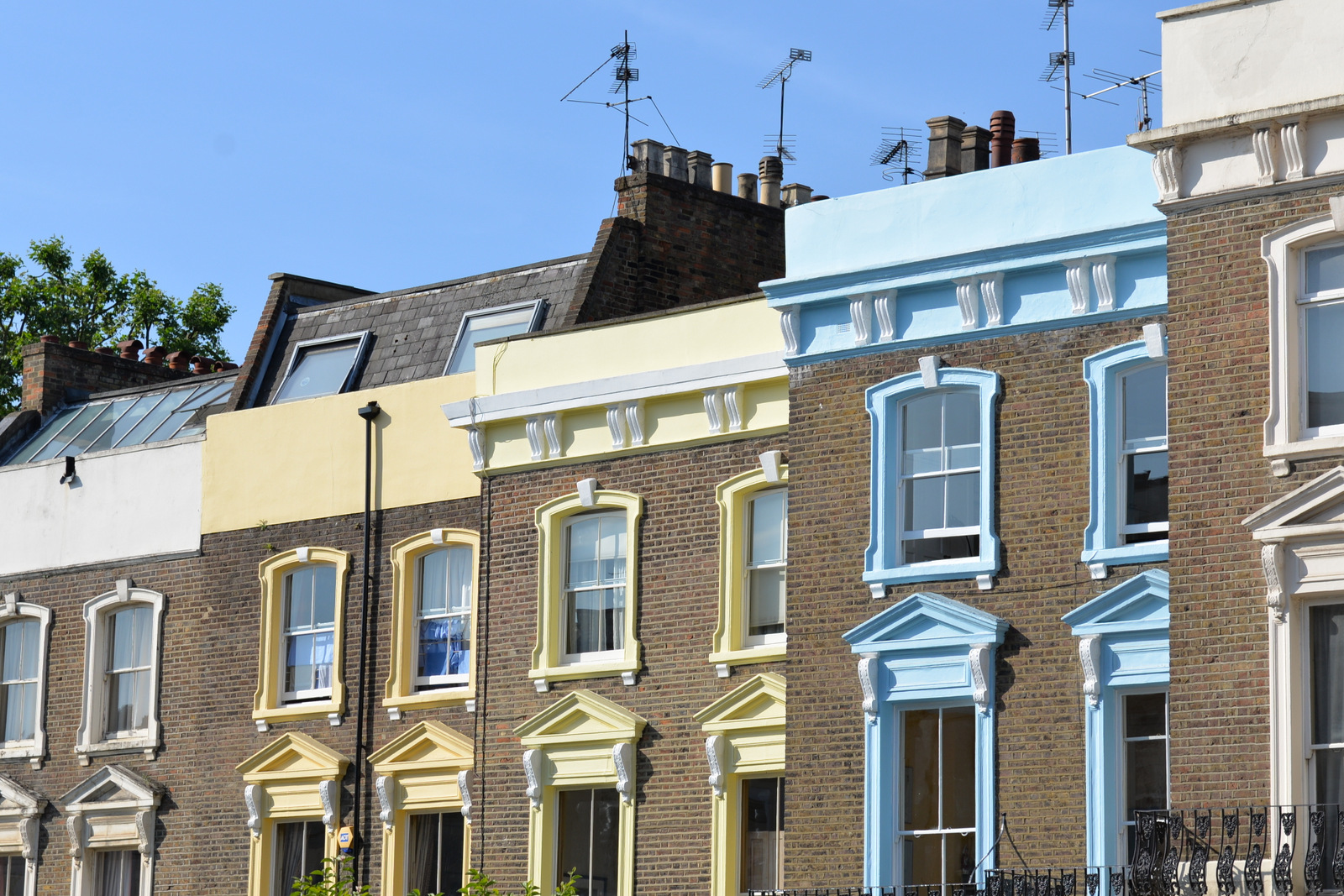
I wonder how many residents of Primrose Hill stop to ask why it looks as it does. Why is that door or window or roof as it is? The appearance is that of a familiar London suburb developed from 1845−75. Facades are Italianate, of brick and stucco, arranged with a grid of streets and mews crossed by two former country tracks and a later railway. The classicism is displayed discretely, in the occasional pilaster and scroll, porch and window pediment: the touch of ancient times that gave class to early Victorian speculative building.
Why then did the Hill’s two churches show no trace of the classical style? Its earlier neighbours to the south and west, St Marylebone and St John’s Wood, were starkly Grecian. Yet St Mark’s of 1851 is Victorian Gothic and St Mary’s of twenty years later is red-brick neo-Gothic. The answer is the Victorian battle of the styles: Italianate for living, Gothic for worship. Londoners in the 19th century knew the language they wanted around themselves, and for which purpose. It is the language they bequeathed to the area’s residents, probably in perpetuity.

British architecture − the style of its built environment − has always been subject to fashion, often to no more than transient whim. Yet few now speak its language and comprehend its meaning. We used to know what we liked and disliked. The parishioners of St Peter Easton Square came near to rioting when it was rebuilt in 1837 classical not Gothic.
Theorists such as Soane, Pugin and Ruskin handed down judgements with theological certainty. Just as 18th-century Londoners took classicism to their hearts, so Victorians took to Gothic and then to Queen Anne. The result is the vagaries of estates across every inner London suburb, depending on the decade in which they were built. By the Edwardians, civic baroque fought suburban Arts and Crafts. In the 20th century, the suburban explosion pitted neo-Tudor against neo-Georgian.
After the Second World War, a great revolution occurred. For some thirty years modernism captured the attention of town planners. It declared the existing city to be obsolete and unsuited to the motor car. It needed demolition. All should be rebuilt, preferably in the style approved by the French architect, Le Corbusier. Extensive demolition proceeded in inner cities such as Glasgow, Liverpool, Manchester and East London.
The influence of this movement was, for a while, phenomenal but is now little noted. I find few are aware of the planned destruction of much of Britain’s inner cities. London’s plan called for the demolition in the West End of Whitehall, Piccadilly Circus, Covent Garden and Soho. The Blitz was timid in comparison.
The result was the counter-revolution of the conservationist 1970s. The successful saving of Covent Garden led to the rescue of Piccadilly and Carlton House Terrace. This was followed by the abandonment of the Motorway Box, which would have driven an overhead motorway across Camden and Islington. Old London was saved by conservation areas. Even so, planners in league with developers and their architects continue to want their visions given priority over consultation and conservation.
The problem is that urban change is a conversation of the deaf. The language in which London architecture was discussed in the 18th and 19th centuries is largely left to architects. It is as if only musicians could discuss music. We may dislike brutalism, or concrete and glass, or high rise, or we may not, but we lack the words to say why.
I believe architecture should be taught as are other art forms. It matters, just as countryside and air pollution matter. Eyes should be opened to issues of style. We should not leave our surroundings in the hands of others. We need to speak architecture.
Simon Jenkins’ Short History of British Architecture: from Stonehenge to the Shard is published in October.
On Wednesday 13 November at 7pm, he will be speaking at the Primrose Hill Lecture Series in St Mary’s Church.
Tickets are £15 / £10 concessions/online and are available from eventbrite.co.uk or from Primrose Hill Books.
Main photo by Jason Pittock