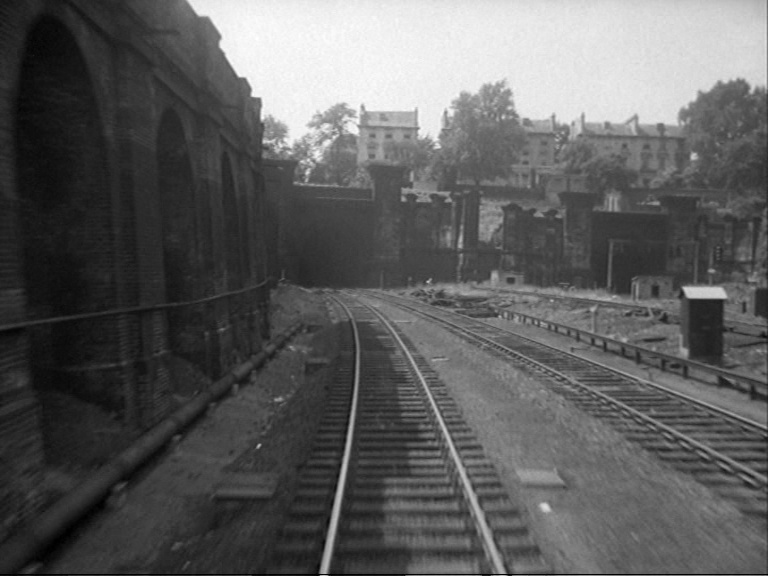
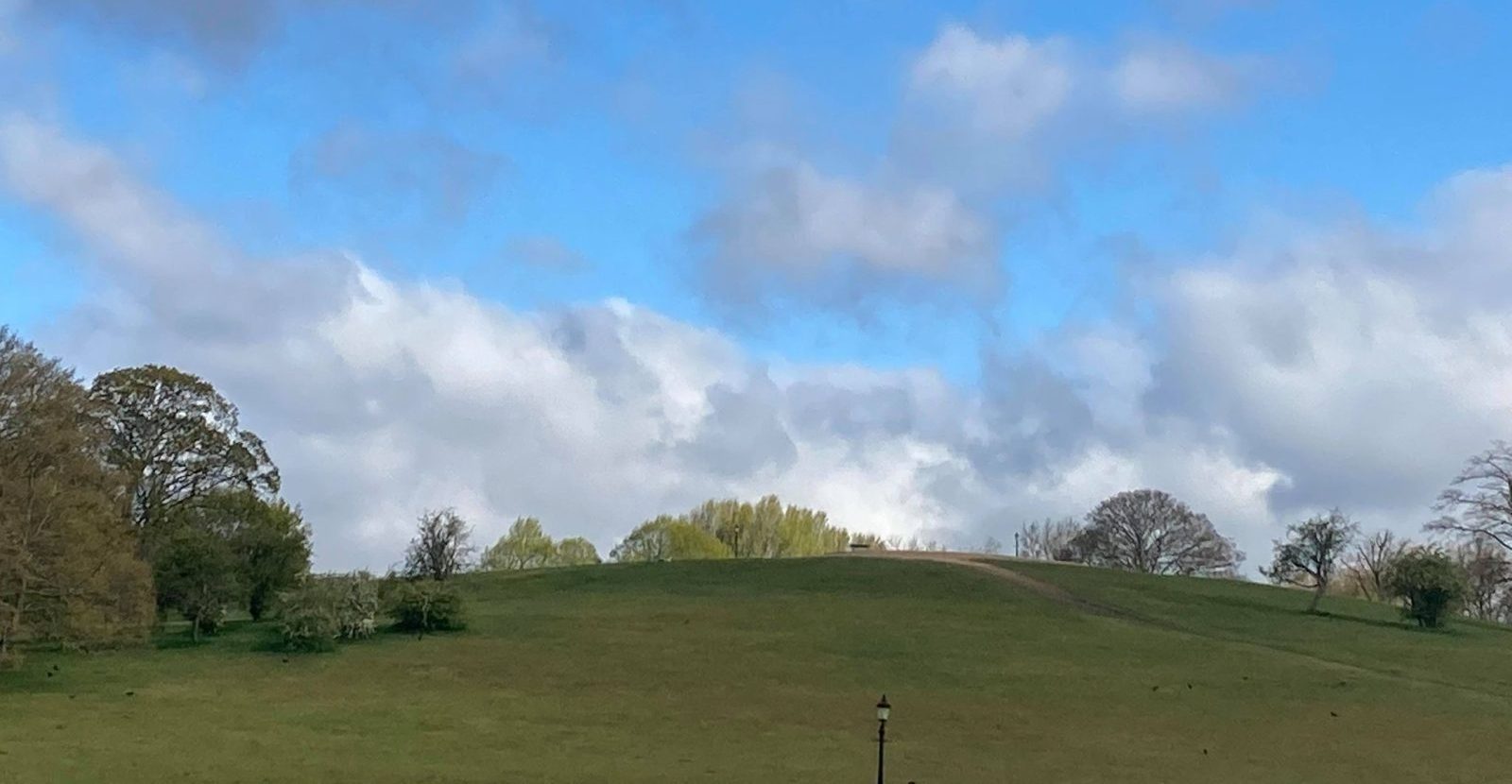
Photograph by Janet Dulin Jones.
In 1850, two young buffaloes broke free from Paddington station and, disturbed by sweeps shaking a soot bag, broke free and charged out across Regent’s Park into Primrose Hill, injuring seven people. This unusual vignette might have been lost to many of us were it not for local historian Martin Sheppard.
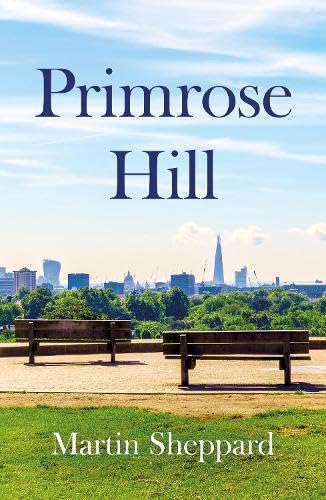
In 2013, Martin published Primrose Hill: A History;but has now written an abbreviated version, Primrose Hill. This version covers the chronological history of our area, as well as the spiritual elements of ley lines, UFOs, Druids and William Blake ‘conversing with the spiritual sun’, plus more down-to-earth details such as the clay structure of the Hill and its impact on local geology.
The colourful history of Primrose Hill is revealed in tales such as the discovery of the body of Protestant magistrate, Sir Edmund Berry Godfrey, and the duels: 42 known challenges were held in the area between 1790 and 1837, with seven men killed and fourteen injured. The reasons for the challenges included ‘being pushed off the pavement, the use of an insulting nickname, the failure to keep an appointment, a quarrel between two dogs and disparagement of the navy. While only a few of the disputes were fought over women, two piano journeymen fought a duel about tuning.’
Throughout the eighteenth century, Primrose Hill became a destination for excursions and various structures were planned for the Hill, including a replica of the Parthenon, a pagoda, a pyramid taller than St Paul’s Cathedral, a villa for ‘physical and spiritual refreshment’, a statue of Britannia and a statue of Shakespeare. There were also two campaigns to build a cemetery.

The government eventually acquired the Hill and opened it as a park in 1842. It was deliberately left wild and was more like open pasture, complete with grazing sheep. In 1848 a gymnasium was opened which excluded women and children under eight. A kiosk which had been part of the Great Exhibition was placed near Barrow Hill Reservoir in 1851, and then upgraded to tea rooms in 1859. The playground was added in the 1920s.
Primrose Hill was described as ‘the Hyde Park of the working classes’ and gained a reputation as ‘a place of popular rather than genteel amusement’. The press coined the term ‘Cockney Sundays’, and in July 1845 reported that ‘Primrose Hill is a living mass on a Sunday evening’.
Famous early visitors to the Hill included Herman Melville, author of Moby Dick, Eleanor Farjeon, and Lenin who used to ride over from Clerkenwell with his wife as it only cost sixpence. H. G. Wells included mentions of Primrose Hill in The War of the Worlds and also The Invisible Man,in which the hero is ‘sitting in the sunshine and feeling very ill and strange on the summit of Primrose Hill’ the day before he becomes invisible.
Vandalism was an ongoing problem on the Hill, with reports in 1877 of the glass panes in lamps being smashed. In 1934, the see-saw was destroyed in the playground and a swing went missing. Hooligans were reported as using the gymnasium as a rendezvous in 1936, and there was evidence that it was ‘becoming a training ground for prostitutes’. An aluminium viewfinder was placed on top of the Hill in 1953 but was continually vandalised, no matter what precautions were taken, so eventually the Park admitted defeat and removed it in the early 1960s.
The book contains a chapter on the two World Wars and how they affected Primrose Hill, including a sketch of the guns and huts placed there in 1941. Four high explosive bombs and two oil bombs fell on the Hill, V1s fell on the Zoo, the canal and King Henry’s Road, and a V2 fell on the tea room and obliterated it in 1945.
Primrose Hill is a fascinating gem if you’d like to delve into the history of our area. It’s available at the Primrose Hill Community Library and Primrose Hill Books.