By S.L.
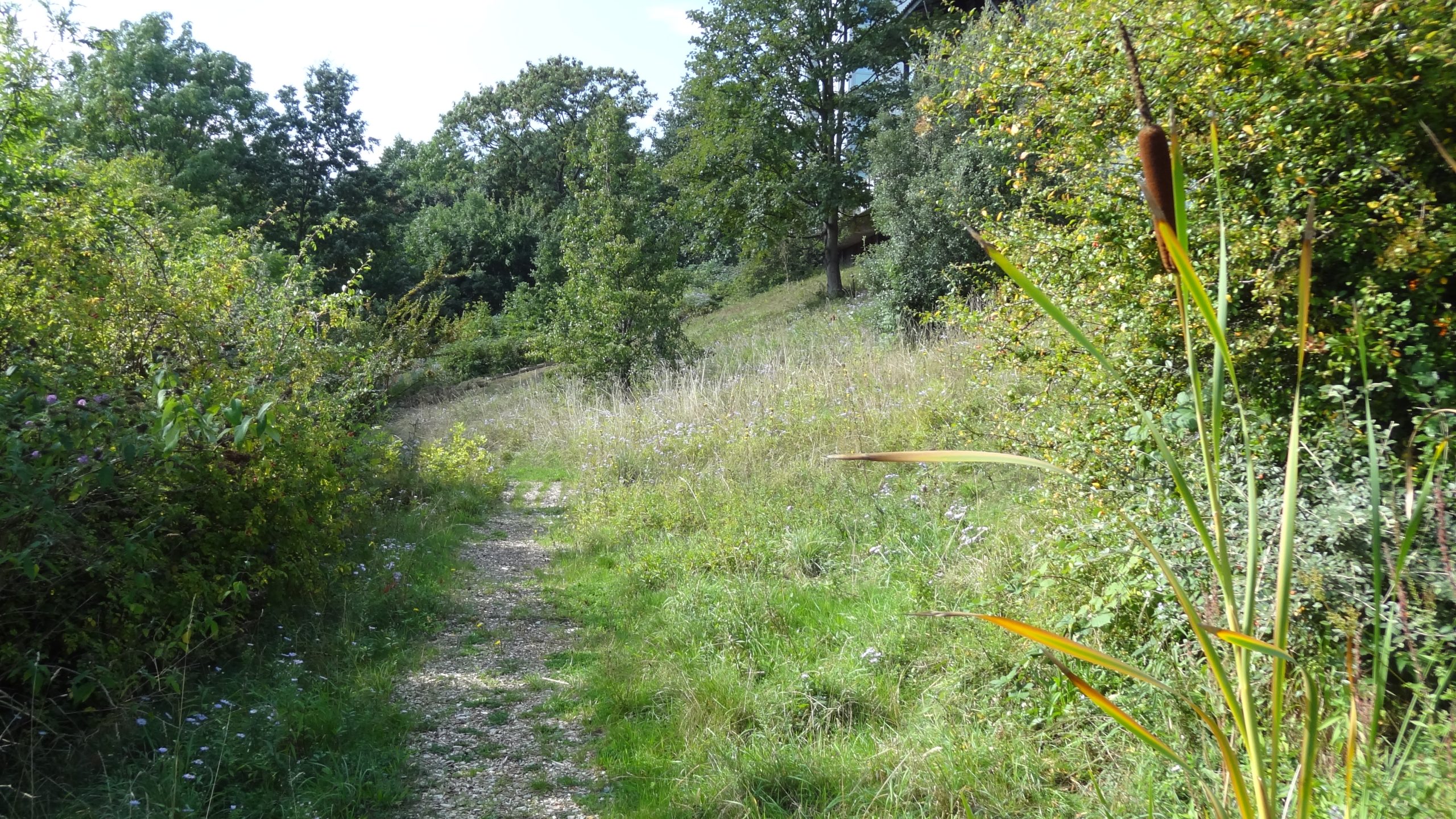
Nestled in the middle of Chalk Farm, Primrose Hill and Belsize Park lies a meadow called the Adelaide Nature Reserve. It sits on a stretch of railway embankment, so as you enter and head down the slope you may feel you are trespassing, but I encourage you to keep on going. As you walk through the reserve, you’ll notice that this little piece of land provides a home to a large number of tiny and medium-size creatures.
The site has been recognised as a nature reserve since 1984, but for hundreds of years it was a hay meadow. Then in the 19th century, the railway was tunnelled through it. The land is now owned by Network Rail, and leased to the London Borough of Camden for use as a nature reserve. Since 1985, the site has been managed by the Adelaide Nature Reserve Association, and volunteers from Camden’s Green Gym play an important role in ensuring that the reserve remains untouched. Even with it receiving its Local Nature Reserve status in 2011, it is continuously under threat by project proposals in the area, the worst instance being the disastrous HS2.

Dave Lawrence, a retired microbiologist, is now secretary of the Adelaide Nature Reserve Association. He says, “The Adelaide Reserve has 180 wild plant species, 30 different types of trees, 160 various species of insects, 23 species of spiders and 40 bird species. These species are in great danger as HS2 has removed part of the woodlands, and many other nature reserves in the area have already been demolished. It is critical that we continue to preserve the reserve. The benefits of keeping these nature reserves alive are tremendous − to humans, to nature and to our ecosystem.”
In 2019, a global assessment of biodiversity and ecosystem services estimated that a million species are at risk of extinction, many within decades, concluding that “we are eroding the very foundations of our economies, livelihoods, food security, health and quality of life”. The fact that so many species are declining at such a rate – 100 to 1,000 times the natural background rate – has led to the situation being described as the planet’s “sixth mass extinction”. This has Lawrence and members of the Association worried about the future of the Adelaide Nature Reserve.
The reserve offers a small patch of magic, so much so that when you walk through it, you almost forget you are in central London. It is dominated by a south-facing meadow with some adjacent areas of woodland. There are two ponds: one of which has a dipping platform. A circular path runs around the site. A mural, which includes illustrations of site wildlife, overlooks the reserve. Dave Lawrence continues, “Nature is under so much pressure, particularly urban nature. Green spaces like this are so important, particularly along railway lines. They act as green corridors, which means that wildlife can move between different parts of the borough.”
The Adelaide Nature Reserve Association and volunteers from the Camden Green Gym have made a huge contribution to keeping the reserve unharmed. The Green Gym volunteers work hard to ensure that the area doesn’t turn entirely into woodland. As Dave Lawrence puts it, “Volunteers are what keep this piece of land alive and unspoiled. Without them, the site is in great danger. We need volunteers to continue managing the site and fighting to preserve it. Without them, I fear it will all be lost.”
If you would like to visit the reserve, it is open to the public every Saturday and Sunday from 8am to 4pm. Events are held on the last Sunday of the month from 11am to 3pm and at other times by arrangement. Activities have included bird and plant surveying, nature trails, wildlife arts and crafts, badge making, nature quizzes and games and much else.
We are also looking for new volunteers. If you are interested in this role, please email Dave Lawrence at dave.lawrence@uclmail.net.