By the Mole on the Hill
Grandad, is that a giant beehive down there?
No, lass. That’s the Roundhouse.

Well, I can see it’s round, but it’s a bit big for a house.
That’s because it’s the Roundhouse. Down there they have the best gigs, great plays, circuses and all kinds of events. And loads of young people get involved in creative stuff there.
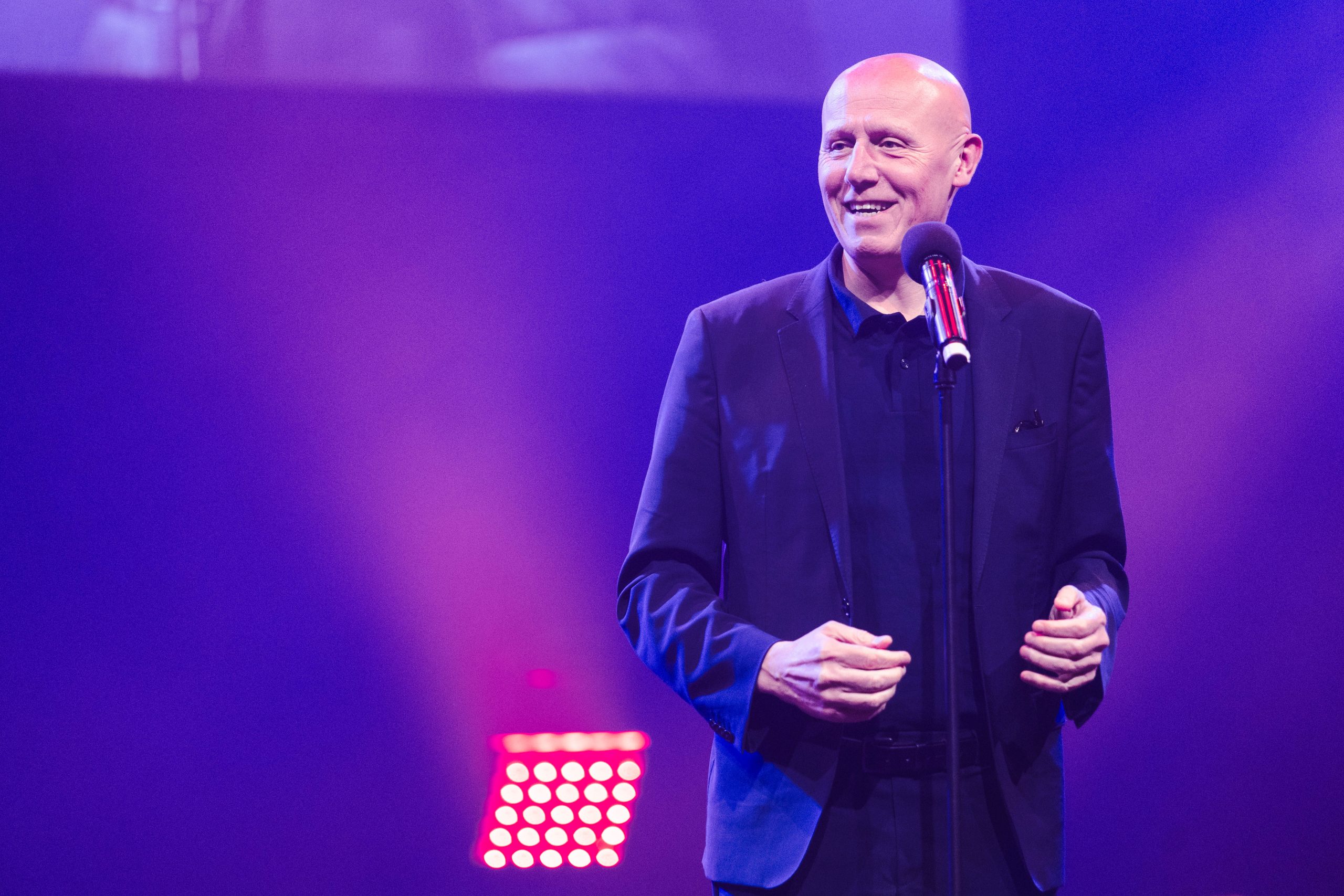
On 1 June this year, Marcus Davey CBE will have completed 27 years as artistic director of the Roundhouse. This is his opportunity to ‘take a bit of time out.’
“It’s been so intense for so long that now is the right time to try something else, time to let someone else take over. Not that I don’t love it. And in a sense that is why I decided to leave – because I love it so much and I never want to get to the place where I don’t love it. I love meeting the young people, and seeing the progress they make. And the Roundhouse is in a really strong position now, so it’s a good time to go.”
School was not easy for Marcus. He was bullied, and it didn’t help that his hair started falling out when he was fourteen; nor did the fact that he was in the bottom set and that his parents were teachers. One summer the family swapped houses to live in Edinburgh when the festival was on.
“My great aunt bought tickets for Mahler’s 2nd Symphony with Simon Rattle conducting the CBSO. I’d never heard Mahler before, and it was amazing. This led to more music, and I was good at sport so it built my confidence; before long I was Director of Arts at the Dartington Trust.”
At the time the Roundhouse was a dump. It was barely safe, but Torquil Norman, an entrepreneur who had made his fortune out of children’s toys, saw the potential of the Roundhouse and bought it. He contacted Marcus and they talked through his plans. The result? After three interviews and at the age of 31, Marcus became Artistic Director of the Roundhouse with five people in the office. The fact that the Roundhouse is now an outstanding centre for the arts is entirely due to Marcus and the team he put together.
“This is the best project ever. We now have 200 full-time staff, 500 freelance staff and 200 volunteers. I am so privileged to have been able to do this for so long. This is a centre for transforming young lives. It is about non-formal learning and active participation in the arts.”
Those who visit the Roundhouse to see performances will probably be unaware of what is under their feet. When the derelict railway shed was first taken over by the Roundhouse Trust, the underground space was filled with compacted ash that had been tipped out of the steam engines. Considering that the shed for turning round the engines was only used for about ten years and had to be abandoned because the new engines were too long for the turntable, there was a colossal amount of ash and debris that had to be dug out by hand. What is left are beautiful Victorian brickwork arches that support the weight of the building; above them is a series of workspaces, fully equipped for creative use by young musicians and theatre workers.
Marcus was fully involved in the restoration work. Indeed, he was working with a brush and shovel clearing the approach that the public would use when he was summoned to the front of the building. He was given a key and told there was something wrong with the door. He was somewhat irritated when the key worked perfectly. He was then told, “You have now opened the Roundhouse” and he went out to be greeted by all the staff and to celebrate with champagne.
The public is also probably unaware that all the profits from ticket sales go to fund the work the Roundhouse does with young people. The creative team work with over 11,000 young people aged 11-30 every year. To date over 100,000 young people have been helped with training and work experience and many have gone on to fame and fortune.
In his time as Artistic Director, Marcus has curated an extensive artistic programme, commissioning leading international artists, hosting major music acts and festivals and appointing Daniel Kaluuya as Associate Artistic Director. This April, Roundhouse Three Sixty Festival returned and the Roundhouse came alive with unique performances and unmissable collaborations.
It seems appropriate to include here some information about the Young Creatives Commission, which was launched after a year‑long national inquiry into how to widen children’s and young people’s access to arts, culture and the creative industries. It will draw on lessons from sport to explore how similar approaches could be adapted to widen participation in arts and culture, with a focus on boosting opportunities for young people aged 10−25, particularly those from underrepresented backgrounds.
In 2026, the Roundhouse celebrates 20 years since reopening as a youth charity and multi-arts space, offering affordable opportunities across music, performance, broadcasting, film, spoken word, dance and entrepreneurship, and access to professional studios for creatives aged 13–25 from as little as £1 an hour.
We wish Marcus all the best with his new endeavours. He will be replaced by Jenny Mollica, Chief Executive of the English National Opera since 2023.
Photography by John Williams