By William Miller
Primrose Hill has been a huge part of my family’s life and always will be. When I was a young boy, my father would take me up the Hill and, with his arm stretched out, run his finger around the perimeter of Regent’s Park and Primrose Hill, telling me how his life had been spent slowly moving clockwise around the two parks, from Park Crescent to St John’s Wood, then Regent’s Park Road to Gloucester Crescent.
As I looked along the length of his arm, there was one other landmark that filled me with pride. It stood out, bold and red, between the end of his finger and the canopy of plane trees bursting over the rooftops of Gloucester Crescent: Primrose Hill Primary.

This was my primary school from the age of four to eleven, between 1968 and 1975. Last year, I returned to the school for the first time in fifty years, but this time as one of its governors.
Walking back through the doors, the strangest thing was just how familiar it felt. The building has changed surprisingly little. The corridors, staircases and old Victorian character, with the separately marked entrances for boys and girls, are all still recognisable.
But the school I found within those walls was, in many ways, a completely different institution from the one in which I spent seven formative years. I wrote about going to the school with some affection in my published memoir Gloucester Crescent: Me, My Dad and Other Grown-Ups, where I described what it was like to be the child of so-called ‘posh parents’. My parents and their friends hated that title, as it stood for everything they were trying not to be.
The Posh Parents of Gloucester Crescent were mostly privately educated, but this was the 1960s, and many belonged to that post-war generation of comfortably off people who had rejected much of the establishment from which they came and believed passionately in the values of state education and healthcare.
So, along with most of the other kids in our street, I was sent to Primrose Hill Primary. At the time, what felt like a social experiment was not quite as straightforward as it sounds today.
The school was distinctly left wing. Indeed, looking back, I would probably describe its educational philosophy as having a strong Marxist influence. Class was very much in the air, and some of the teachers viewed the ‘posh kids’ with deep suspicion.
I became aware that my family was different. My father was on television, as were some of his friends, and we lived in a large and comfortable house. I remember being conscious that these were not necessarily things to advertise too loudly. There was a sense that the school was more comfortable with children who represented the working-class culture it wanted to champion than with those who came from backgrounds that, in another age, might have been considered part of the establishment. There was much that was admirable about this.
The school took inequality seriously. It encouraged children to question authority rather than simply accept it. It was suspicious of snobbery and believed that education should be about more than passing exams. It wanted children to understand the society in which they lived and, perhaps, to change it. But it could also be rather uncompromising.
The irony is that my parents had chosen the school precisely because they believed in those values. They thought that sending your children to private schools while campaigning for equality was hypocritical. State education was not simply the cheaper option; it was a political and social choice.
Fifty-five years later, almost everything has changed. Primrose Hill Primary is now a wonderfully diverse school, reflecting the extraordinary changes that have taken place in London. Children come from a wide variety of ethnic, cultural, religious and social backgrounds. The language of equality remains central, but the definition of equality has changed.
In the 1970s, much of the conversation was about class. Today it is much more likely to be about diversity, inclusion, identity, disability, gender, race and ensuring that every child has the opportunity to succeed.
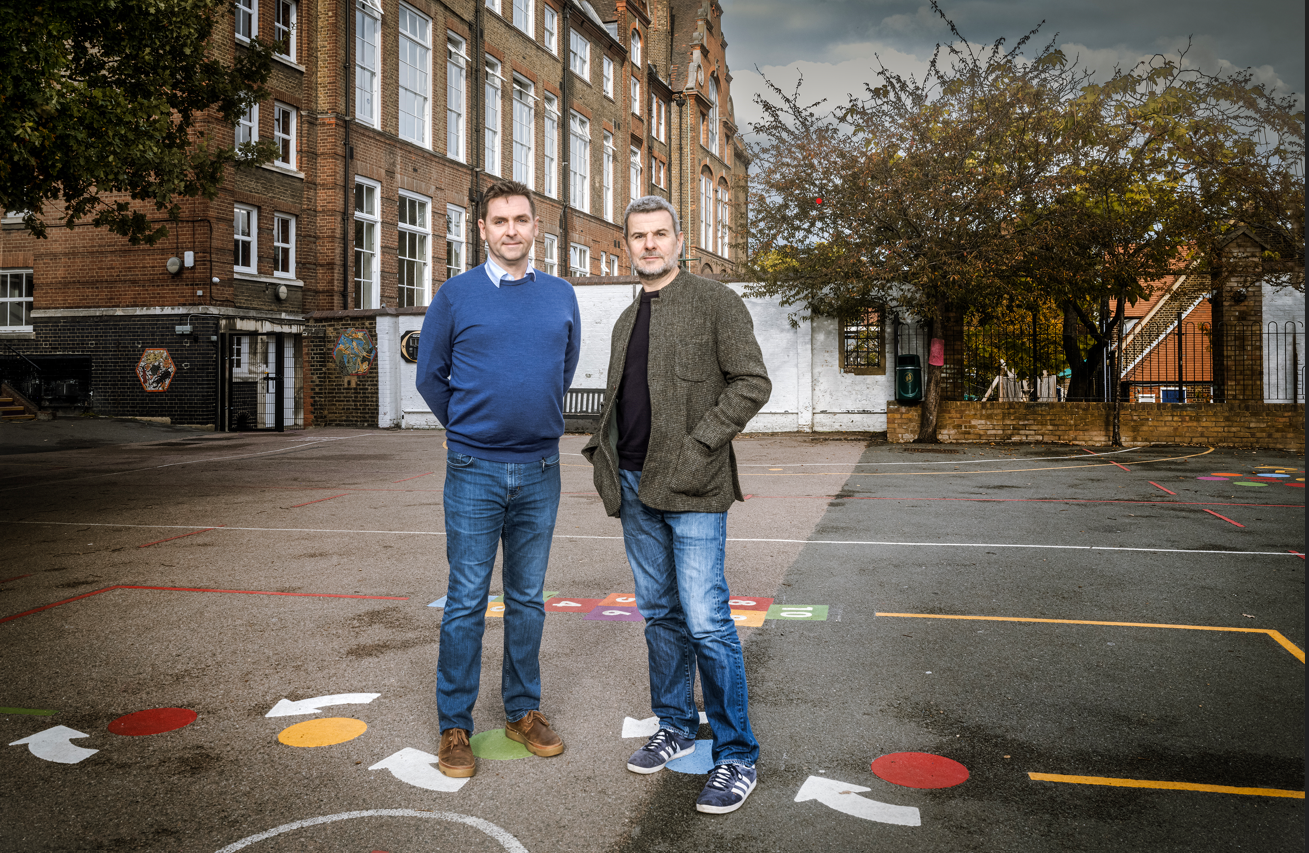
One of the people at the centre of that transformation is the school’s headteacher, Liam Frost, whom I have got to know well over the last twelve months. Liam became head in 2023 and, now that I am involved in the school’s governance, what strikes me is the clarity of his ambition for Primrose Hill. He wants every child to achieve as much as they possibly can, whatever their background or starting point. For Liam, academic achievement and equality are not competing aims: helping children acquire knowledge, develop their abilities and fulfil their potential is central to giving them equal opportunities. There is a structured curriculum and clear expectations, alongside a strong emphasis on inclusion, wellbeing and removing barriers to learning.
The school has retained some of the best elements of its old political inheritance: a belief in fairness, equality and tolerance, and a determination to challenge discrimination. But equality now means something more practical and ambitious: giving every child the support and opportunity to develop their abilities and achieve as much as they can. It is not about holding anyone back, but about helping everyone move forward.
And that is where Liam’s leadership seems particularly important. The transformation isn’t simply about changing the curriculum or introducing new policies. It is about creating a culture in which children can be ambitious for themselves without losing the sense that they belong to a community. That would have been a rather alien concept to the seven-year-old me.
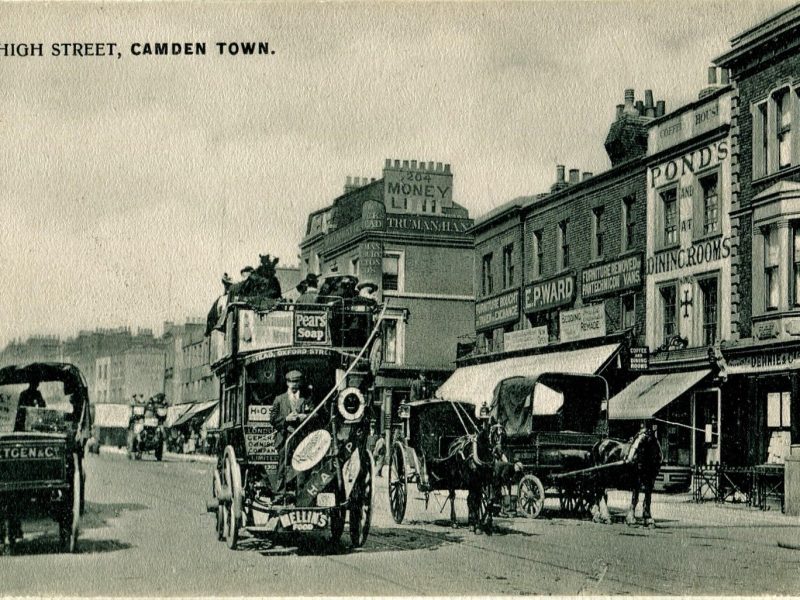
The community around the school has changed too. Primrose Hill in 1970 was already a distinctive part of London, but it was a much less affluent and internationally diverse place than it is today. The extraordinary rise in property prices has transformed the neighbourhood and the families who live here. The school has had to evolve with the neighbourhood, and in doing so has become the Sun at the centre of the Primrose Hill solar system!
Having been the slightly posh child of privately educated parents at Primrose Hill Primary in the 1970s, I now find myself involved in its governance, seeing the school from the other side of the fence. I can look back critically at some aspects of the school I attended, but I can also recognise how much it gave me. It taught me to question things, to think independently and to be interested in the world beyond myself.
Perhaps that is why, despite all the changes, it still feels like the same school. The politics, the pupils, the neighbourhood and the educational philosophy have all changed. But the belief that a primary school should do more than simply teach children to read, write and count remains remarkably constant.
Walking through those doors, I wasn’t simply returning to my old school. I was discovering how its best ideas had survived and evolved – and how, under Liam Frost’s leadership along with the school’s amazing staff, the school has become more open, ambitious and inclusive than the one I remember.
For families living around the Hill today, that combination is rather special: a school with a remarkable history, a strong sense of community and a very clear ambition for the future. That iconic red-brick building on Princess Road may still look much the same – but the world inside it has moved on.
So if you are a parent living on or around the Hill with a young child and wondering where your child should take their first steps in education, I would encourage you to come and see it for yourself. I came here as a four-year-old more than half a century ago, and I came back as a governor fifty years later. Comparing the two ages of the school, I can say with confidence that Primrose Hill Primary remains a very special place to grow up and learn.