By David Lennon
Jeremy King, London’s greatest restaurateur, loves Primrose Hill; and so does his lively Cockapoo dog Teddy: “She thinks she’s the Queen of the Hill and would be devastated if we were ever to leave.”
In fact it’s the dog that will probably ensure that this peripatetic resident of many London neighbourhoods may stay among us. Also, he is now so busy recreating his restaurant empire that he may not have time to drive around in his 40-year-old classic Bristol grand tourer looking for a new residence.
Teddy likes to root around in the local shops and restaurants, and Jeremy rattles off the names of the village’s cafés, restaurants and shops and their owners with great familiarity. Hardly surprising, since he first resided in Chalcot Square in 1998 before moving on and then coming back to the village in 2022.

“Primrose Hill is very important to me. The community is still very welcoming. There are so many interesting people and good places. I think what’s missing for a lot of people in London is a sense of community; whereas Primrose Hill feels as though it’s part of the city but at the same time has that village atmosphere.”
Together with his business partner Chris Corbin, they created, owned and managed some of London’s most celebrated and best-loved restaurants: Le Caprice in 1981, The Ivy in 1990, J. Sheekey in 1998, and the biggest hit of them all, The Wolseley, a former car showroom on Piccadilly, which they opened in 2003 as an all-day brasserie/grand café in the European style.
Many more restaurants were to follow in the next two decades, including The Delaunay in Aldwych, Colbert in Sloane Square, the smash hit Brasserie Zedel off Piccadilly Circus, Fischer’s in Marylebone and Soutine in our neighbouring St John’s Wood, all overflowing with the works of contemporary artists.
When you walk into one of their creations, you are breathtaken by the design: often with the combination of Viennese grand café and French brasserie, with their relaxed, unstuffy ambience. Each restaurant has its own character, dictated by the building and its impact on Jeremy, who once considered studying architecture and design.
“The food should reflect the restaurant, but not dominate. We believe in good food, fairly priced.” Hence no celebrity chefs. Clients are more likely to know the names of the Maître d’s than the chef. And for regulars, this relationship is reciprocated by the staff on reception; they know you and your likes and will try to allocate a table accordingly.
Le Caprice, next to the Ritz, attracted the rich and, most famous of all, Princess Diana. Artists and theatricals were huge supporters of The Ivy from the outset. Then Lucian Freud, England’s most famous painter of his generation, had a regular table at the Wolseley which was draped in a black tablecloth when he passed away in 2011.
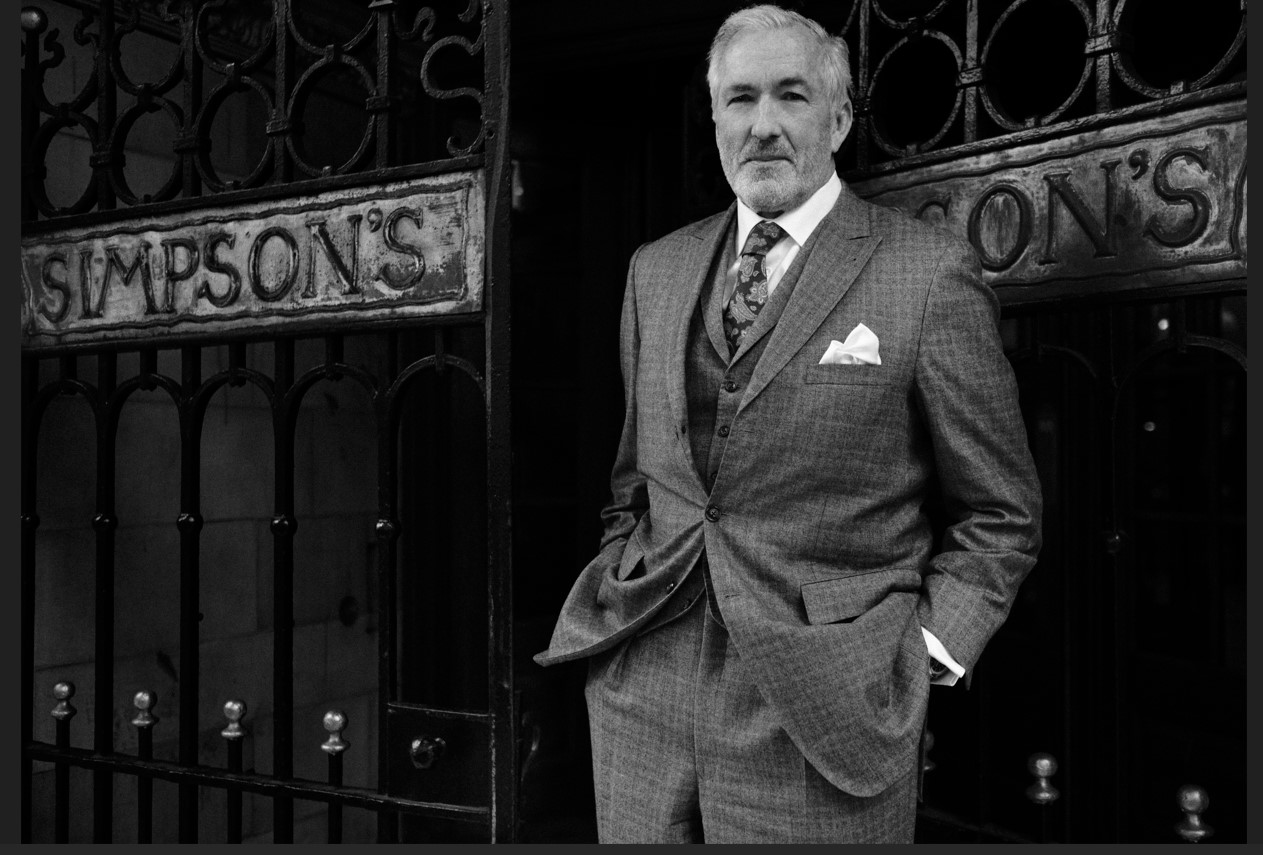
After losing a battle for control of their restaurant empire in 2022, Corbin and King dissolved their business partnership. Many thought this was the end of an era. But after spending Covid lockdown writing his memoirs, Jeremy has stormed back onto London’s restaurant scene: first with the Arlington, a recreation of Le Caprice; The Park on Queensway, an American-style take on the grand café; and this spring reopening Simpson’s in the Strand – all examples of restoring faded restaurants to their former glory, as in his early days.
“I’ve been looking at Simpson’s for over 25 years. We first put a proposal to the owners, the Savoy hotel, but that didn’t work out. We tried again in 2008, and then the banking crisis meant that everything went wrong. We bid again in 2015, but then the Savoy decided to run it themselves and they carried on until Covid, when they closed it down.”
This provided the opportunity to try again to get Simpson’s, and finally it clicked. Jeremy King Restaurants had its prize capture: one of London’s last treasured ‘Grande Dame’ restaurants now has an owner who loves restoring faded beauties, who understands art and above all creating the appropriate atmosphere.
In his element, Jeremy threw his heart and soul into working with the rich history and architecture of the listed building, restoring or replacing the original artworks and commissioning appropriate period portraits. The restaurateur and businessman has brought all he learned in 45 years in the trade to his latest masterpiece.
“An important thing in life is to be both proactive and reactive. I react to buildings, and that dictates what the restaurant will be. I like doing dangerous things. I like a challenge, not safety.”
If you would like to know more inside stories, gossip, how to handle noisy customers, and what to do about dogs in restaurants, then you must read Jeremy’s recently published memoir: Without Reservation − Lessons from a Life in Restaurants. Signed copies are available in Primrose Hill Books. There is also a wonderful audio version read by the great man himself, which gives you a real feeling of the delights and disasters that define the hospitality business.