By The Mole on The Hill
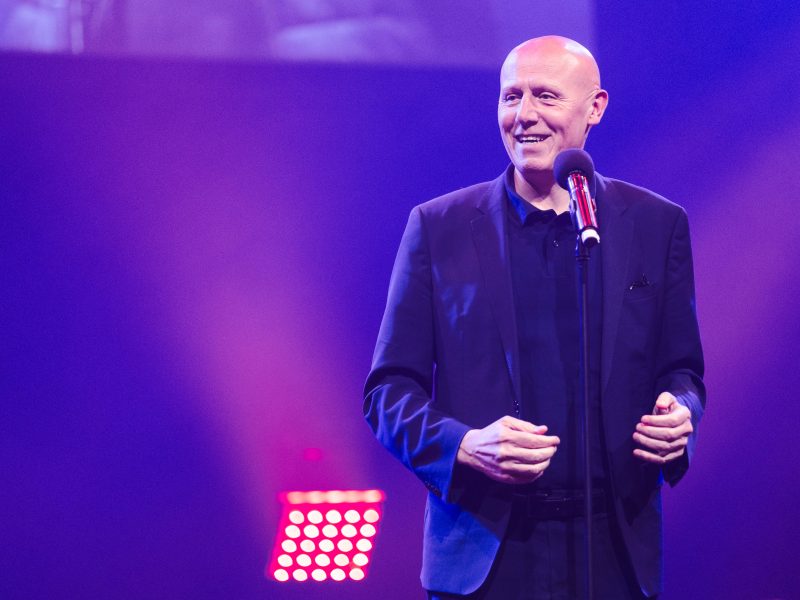
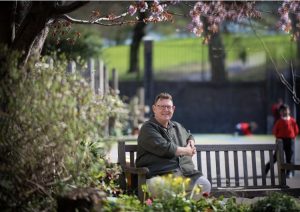
Meet Clive Hale from St Paul’s C of E School
Grandad, is that a school down there?

Aye, lass. That’s St Paul’s.
It must be nice there. Right next to Primrose Hill.
Oh, it is. It’s a lovely school
Clive Hale, 57, was born in New Zealand in Piopio, a small township of 500 people, noted as the place where parts of the second film of The Hobbit were made. His father was a butcher with a couple of shops; his mother was a stay-at-home mum except when, by default, she became a butcher when her husband got the mumps.
“When I was young, I wanted to be a teacher; so after university I decided to give it a go and see what happened. I trained and taught in New Zealand for four years before coming to the UK with my sister. At that time, I thought I was never going to teach again, but she was very practical and said we had to get a job. It was easy to get work supply teaching, so I fell into employment in a Hammersmith primary school and was there for twenty-one years, twelve of those as the headteacher.”
Clive confesses that “Maybe I’m not a good Kiwi: I’ve never played rugby.” Instead, he played hockey at school. What is more to the point, his mother was a potter; and after watching her for years, she said, “Now you have to do it yourself.” He took her advice: he now has a wheel at home and practises the craft at Chiswick Art School.
School holidays have always provided Clive with the opportunity to travel: “I’ve travelled around Europe, and on the trips to and from New Zealand you can’t help but drop off in various countries. I loved getting to know Turkey with a group of friends: proper backpacking. Experiencing a culture and a country in that way is special: getting a sense of how people live, comprehending history − the rise and fall of empire and change. I tried seeing things as an archaeologist: observing all the evidence that popped up; walking the defence walls of a city and finding Greek or Roman carvings. It’s amazing to think that St Paul was here, St John was there, Jesus’ mother, Mary, retired here. It made real what might have been rather abstract.
“I don’t like what’s happening in the world right now; it’s incredibly unsettling, and so difficult to know what the truth is any more. I don’t know how you can impress on children how difficult it is to trust what they’re seeing. In terms of managing that in school, it’s not difficult. We let them look at certain websites: we prescribe what they can look at online. The problem comes when they’re using their own computers, or devices or phones. We can’t protect them; we give them the best advice we can on being safe and careful; we teach them about bias. But it doesn’t stop them watching what their friends are looking at. We have no control over what’s influencing them outside school.”
Clive has been headteacher of St Paul’s for nine years. At the moment they have a garden project with all the classes involved in making pots that are tributes to their garden. In a way this creativity is an attempt to counter the time they spend on computers, searching and looking at things on the internet, and providing opportunities that some children might never have again.
St Paul’s has a growing number of children for whom English is not their first language. When Clive started teaching in England, there were just six children in his class who had no English whatsoever.
“The catchment area here has changed a lot in the nine years I’ve been here. The children used to come from the houses near the school, and there’s still a misconception that our children live in the immediate area with all the opportunities in the world and everything under the sun. But it’s not like that these days. That said, the children coming here receive a very good education and have the opportunity to go on to a wide range of very good secondary schools.
“We work very closely with St Mary’s church and with the vicar, Phil Richie. I’ve been a headteacher in a community school and, compared to that, I find the connection with the church to be really positive.”
Clive sees his job as enabling the teachers to give their children the best opportunities they can with the resources available; to have as positive a childhood as possible; and to be good people. His job is to shield them from government policy and all the regulations and requirements, so that they can get on with doing their essential job.
“Arts provision is central to the education at St Paul’s: we have a dance project with The Place; we’ve been part of the Primary Shakespeare Project for many years; and participate in the Camden music performance at the Royal Albert Hall every second year.
“I wouldn’t want to run a school without the Arts. They provide incredible opportunities. We think about them in the same way we think about writing and maths: you’ve got to practise; you’ve got to make mistakes in order to develop and get better. It’s not just about singing a song or painting a picture; it’s about developing and honing a craft in the same way as you do with a good piece of writing or understanding a new concept in maths. And that discipline is as strong in the Arts as it is in writing.”
This year the school has been looking at the experiences that children should have had by the time they leave the school: familiarity with the theatre, art galleries, London landmarks, like the River Thames.
“We plot those experiences on our learning journey through life at St Paul’s, so that we’re confident all the children are aware of the opportunities before them. I think we’re a very human and compassionate school, where there are lots of very positive ways for children to experience and experiment with life.”
I wouldn’t mind going to that school.
Fat chance. I’m sure they’ve got a waiting list as long as your arm.
Photo by Sarah Louise Ramsay