By Maggie Chambers.
The piano makers in the UK originally came from Germany in the 1700s. By the 19th century, this area had become the centre of the country’s piano manufacturing industry, because the rich network of rail, canal and road networks made transportation of bulky goods relatively simple. At the peak of the industry there were approximately 360 piano factories across England, with over 100 situated between Camden Town and Tufnell Park.
One of the Thursday morning walks organised by the Primrose Hill Community Association was a tour of the former local piano factories in Camden and Chalk Farm, led by photographer Jonathan Root; and as they had been so important to Primrose Hill’s history, I decided to go along.

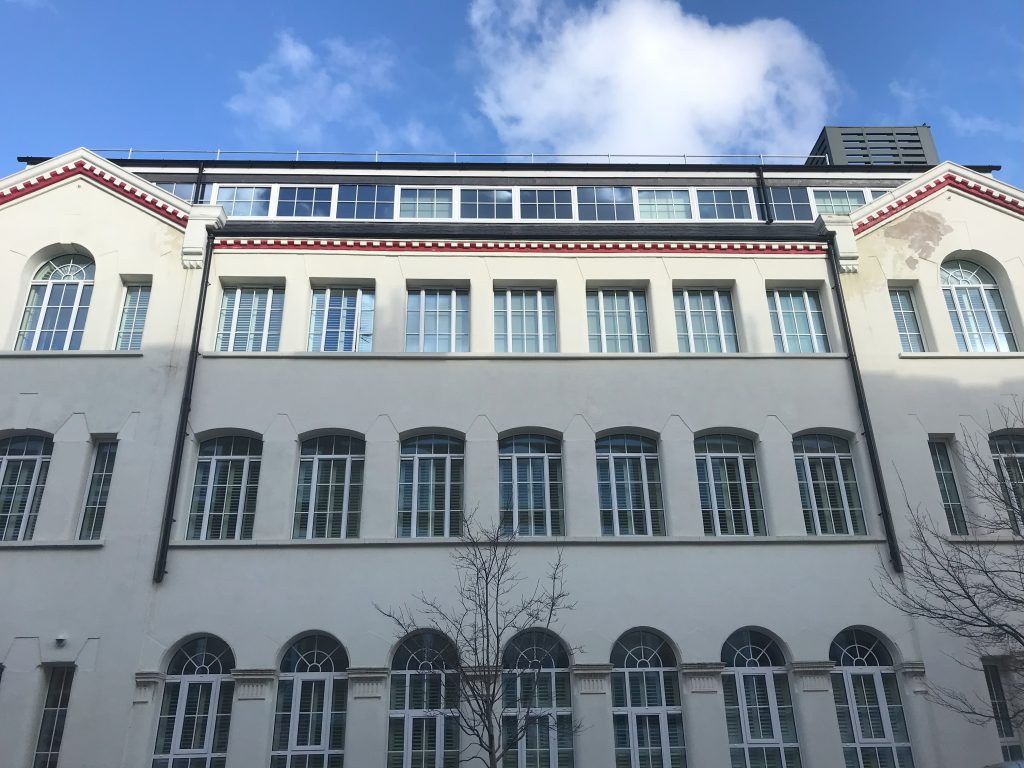
First off was Erskine Road, where the old factory building still stands; you may remember it was once home to Triyoga (which has now moved to another piano factory in Camden). John Malcolm and Co started their business on Bayham Street in Camden, and moved to Erskine Road in 1903. Due to the nature of piano manufacturing, with its steam-powered machinery, seasoned timber, varnish, wood dust and heated animal glue, fires were an occupational hazard. A fire took hold in this factory on 21 March 1906. The building was restored at a cost of £9,000, but five months later the same thing happened again! The building has now been converted into flats.
Across the road from the Erskine Road factory is Erskine Mews, previously stables for the horse-drawn carts which towed the raw materials from the canal and the railway to the piano factories.
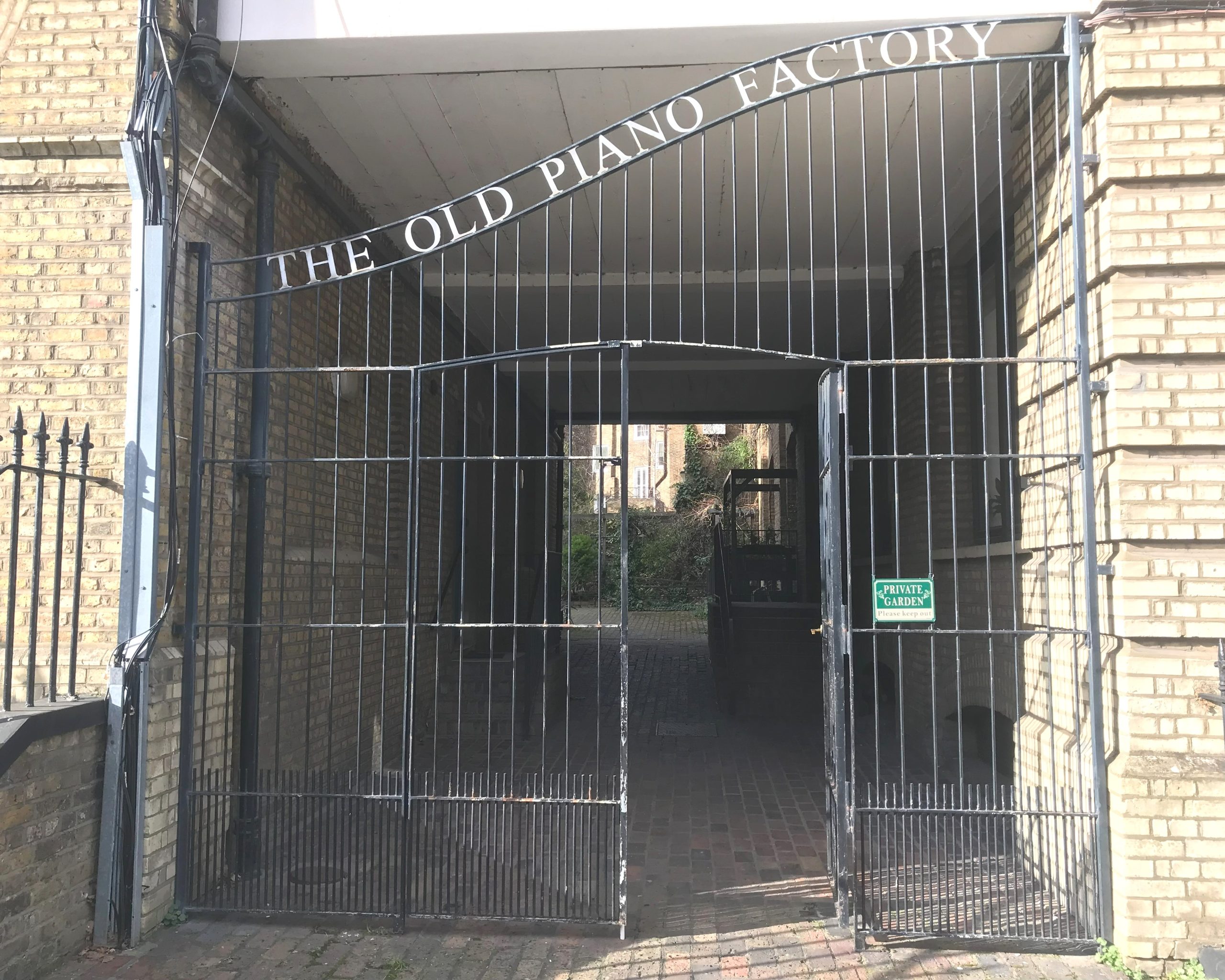
Our next site was The Old Piano Factory in front of the Community Centre on Fitzroy Road, with its ornate Italianate-style portico and piano-shaped gates. The yard included the factory, made of London stock brick, with six adjoining houses. The current Community Centre was originally an outbuilding for the factory.
The name of Hopkinson’s Place stems from the piano manufacturer John Hopkinson, who moved here in 1869 and won many awards for his pianos. In 1924, Hopkinson’s went into voluntary liquidation. The company turned into Rogers and Hopkinson, and in 1963 was taken over by Zender; it then became Bentley’s in 1987.
In 1981, Hopkinson’s Place won one of Camden’s first Civic Trust Awards for the innovative way it was developed to create the homes and Community Centre there now. The Primrose Hill Conservation Area Advisory Committee (PHCAAC) campaigned for the development, and prevented Camden Council from demolishing the site. A tank of fresh water was found under the Community Centre, which would have been used in the piano manufacturing process.
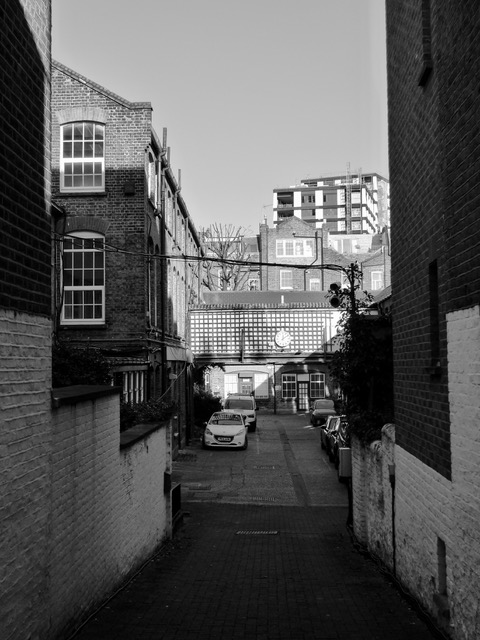
The area behind Chalcot Road houses another piano factory, owned by J Spencer and Co, which was established in 1884. Look through the gates just past Utopia Village and you can see the old structure. There’s a building with a glass roof to let in daylight and a timber drying shed where the wood was seasoned for seven years. Visible from the back of the surrounding houses, the old factory chimney can still be seen.
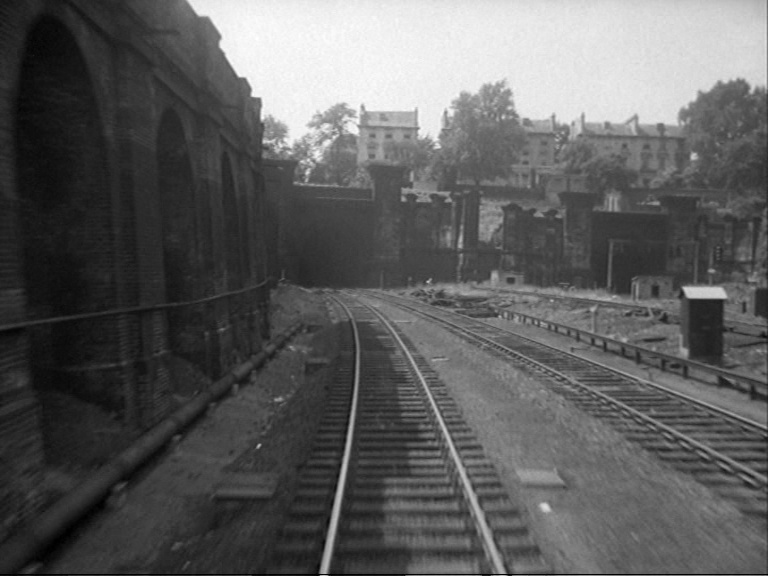
On the other side of the railway tracks is the distinctive circular, Grade I listed building at 43 Gloucester Crescent, on the corner of Oval Road. It began trading as Collard & Collard in 1852, with a central yard where pianos could be winched between floors. But within a year fire raged through an open shaft and destroyed the original building which had to be entirely rebuilt. By 1860 they were selling 40 pianos a week, and for many years this was the oldest factory in the country. Charles Lukey Collard (born 1805) used to transport the pianos by rail from Paddington to his mansion in Somerset; his home had a large ballroom where Charles Collard would play the pianos by candlelight, to make sure they were all of the highest quality. Eventually in 1929, Collard ceased trading. From 1971 to 1988 the building became the offices of Duckworth publishers, where Colin and Anna Haycraft famously published local authors like Beryl Bainbridge.
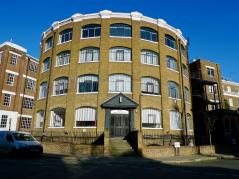
Our fifth and final site was the Chappell factory between Belmont Street and Ferdinand Street, near the Roundhouse. It was built in 1867 for Chappell and Co, whose clients included Beethoven, Strauss and Sibelius. The building went on to house Chalk Farm Photographic Studios, where David Bailey once worked, and is now a collection of luxurious loft apartments.
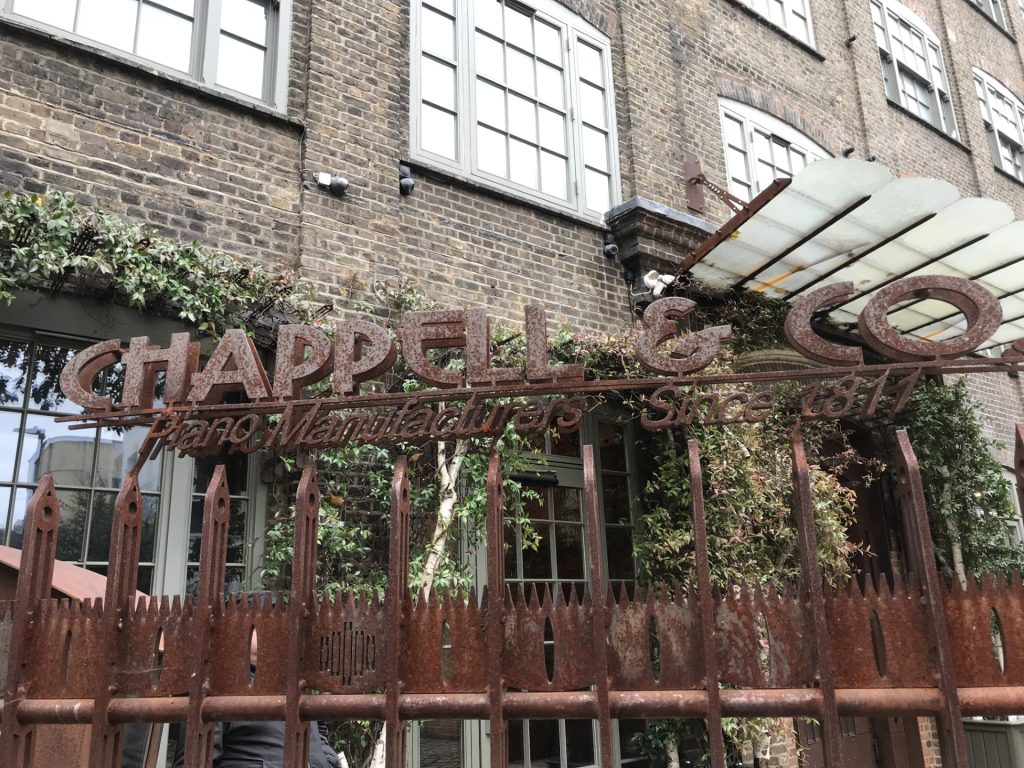
A throwback to the area’s heritage can still be seen in the old signage on Belmont Street, and at the back of the factory on Ferdinand Street can be found a sign commemorating the factory workers who gave their lives during WW1.
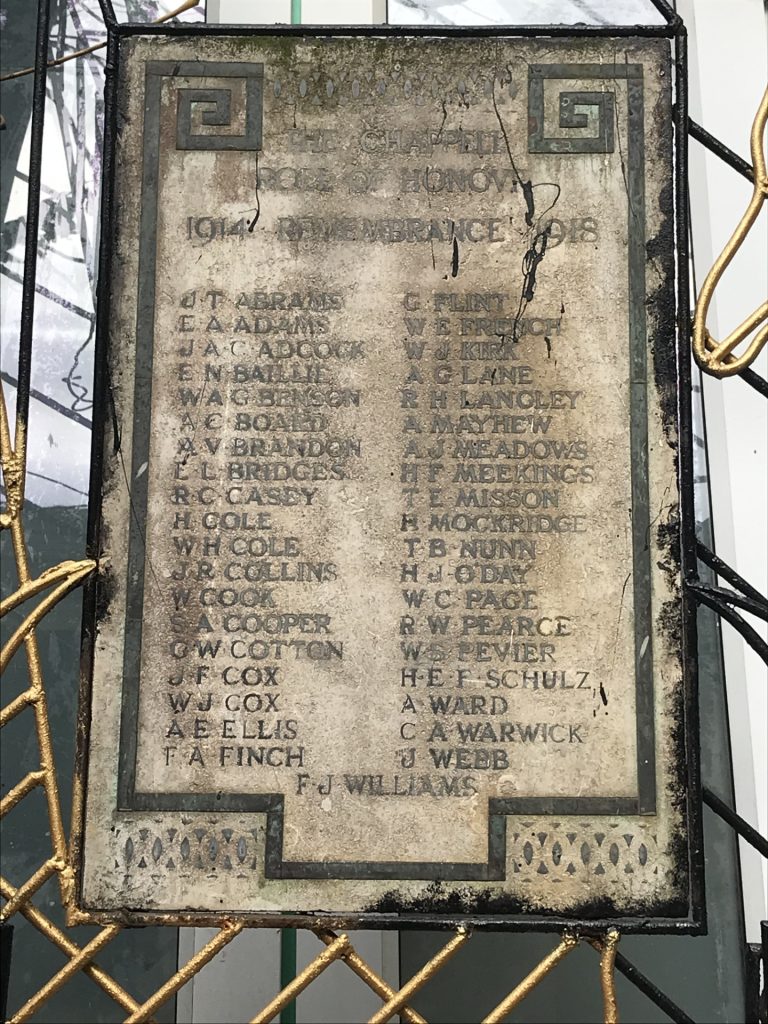
Yet another example of the richness of our local heritage, once you know where to look!